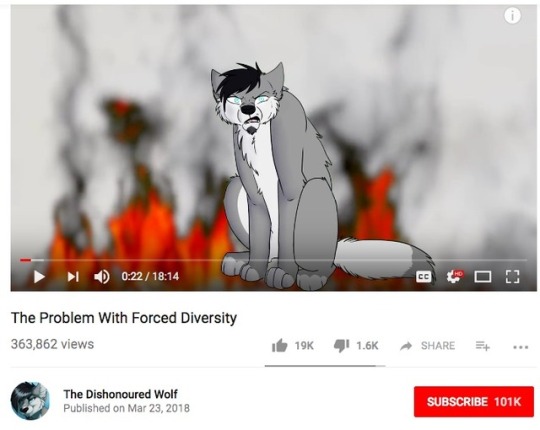
theres an entire subculture on youtube with cocky middle aged adults using some uninterestingly designed persona talking sprite that they commissioned some artist on deviantart for, and use them to make “rant videos” and talking about shit absolutely no one cares about and they are the most boring things on youtube with a huge following
and they’re always videos like this like watch out this talking drawing is going to pwn feminists with his epic ideas for 12 minutes
Japan’s complete lack of understanding of declining birth rates in relation to its work culture reminds me a lot of how America has an assumption that millennials are killing industries when the truth is they are more frugal because of a lack of funds.
Both come from a conservative mindset that neglects the impact that a toxic work culture can have on society.
A 80+ hour work week in order to maintain financial stability isn’t exactly a solid ground to date people and eventually build a family from a healthy relationship.
A workforce comprised of 20 somethings that make between 20-40k a year in entry positions isn’t a good ground to build a reliable consumer base when a huge chunk of that is going to rent, utilities, car payments, and student loans.
This is a fascinating connection, you should write a paper on this
I am convinced that, in general, people want to have families. Many, if not most, would be happy to raise children. But in order to have children and raise them, especially to do so well, people need happy, stable relationships, financial security and time to devote to – you know – actually raising the child. You need both money and time to do that.
If people are not given the time and means to be able to create social connections and strong relationships, to devote to parenthood and family, then they are not going to do it. How can they?
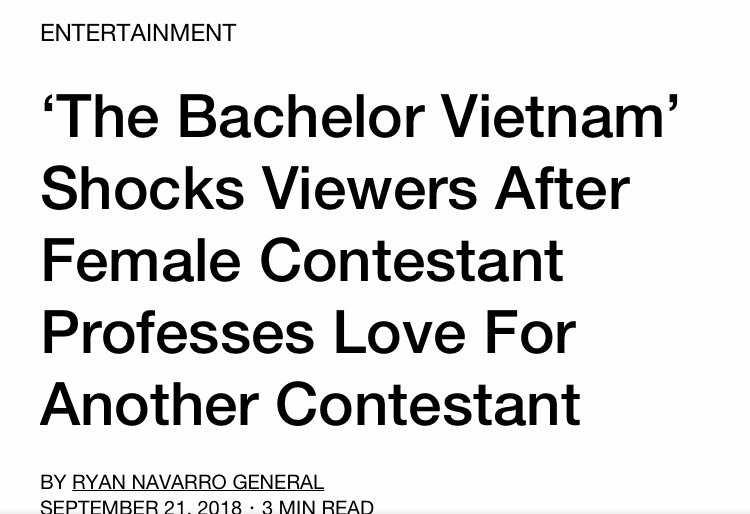
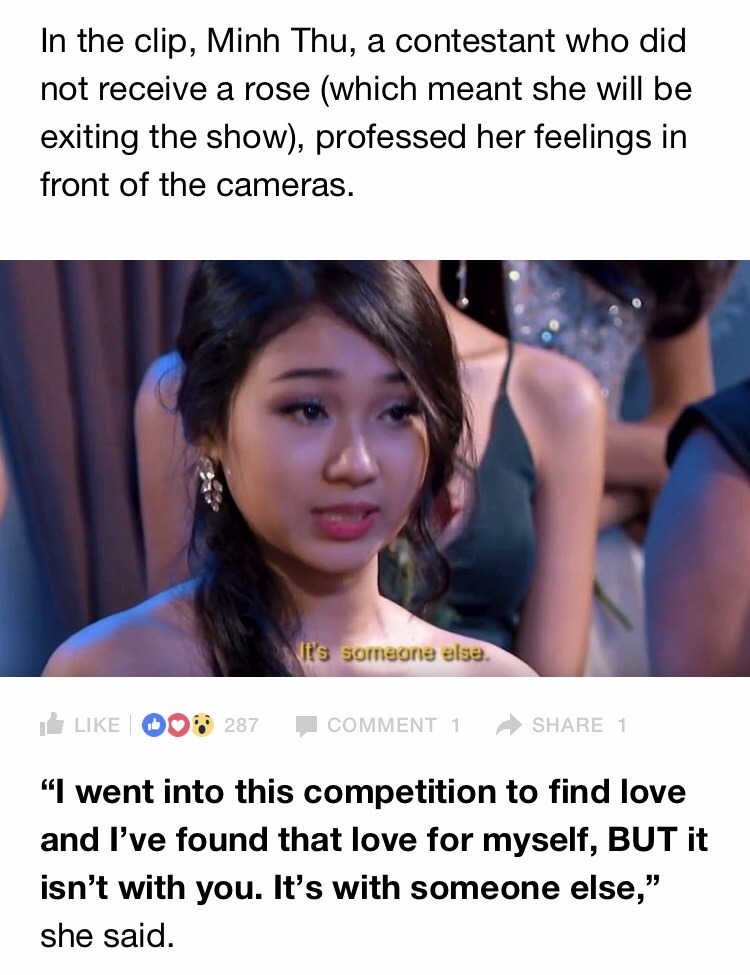
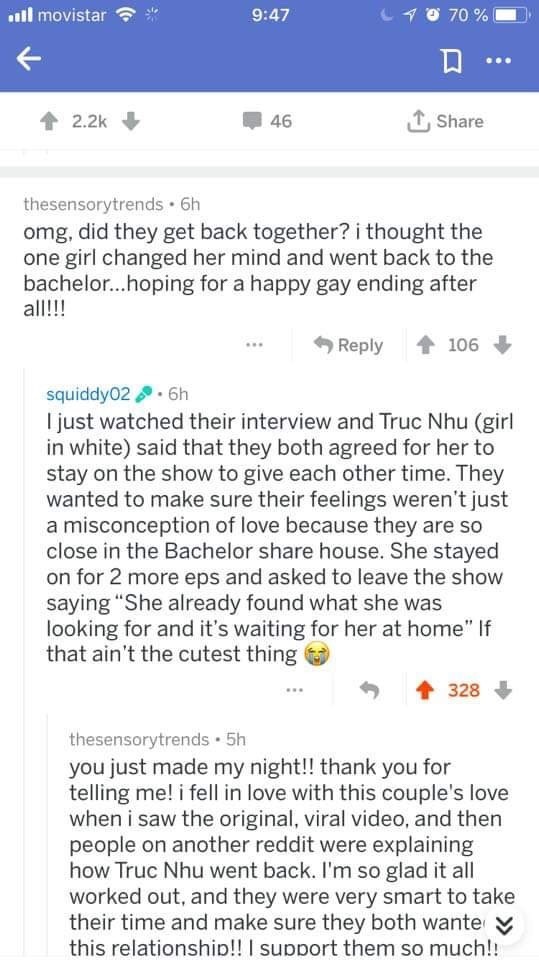
at first, after the contestant minh thu professed her love for the other contestant truc nhu, they walked out of the show together:
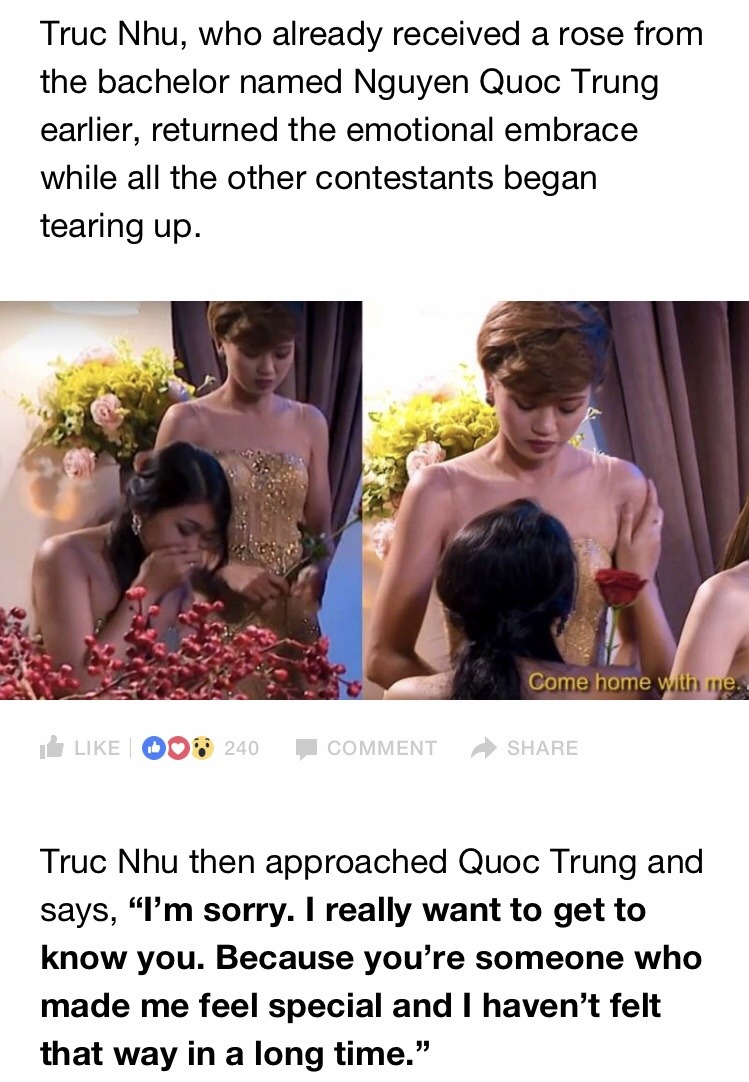
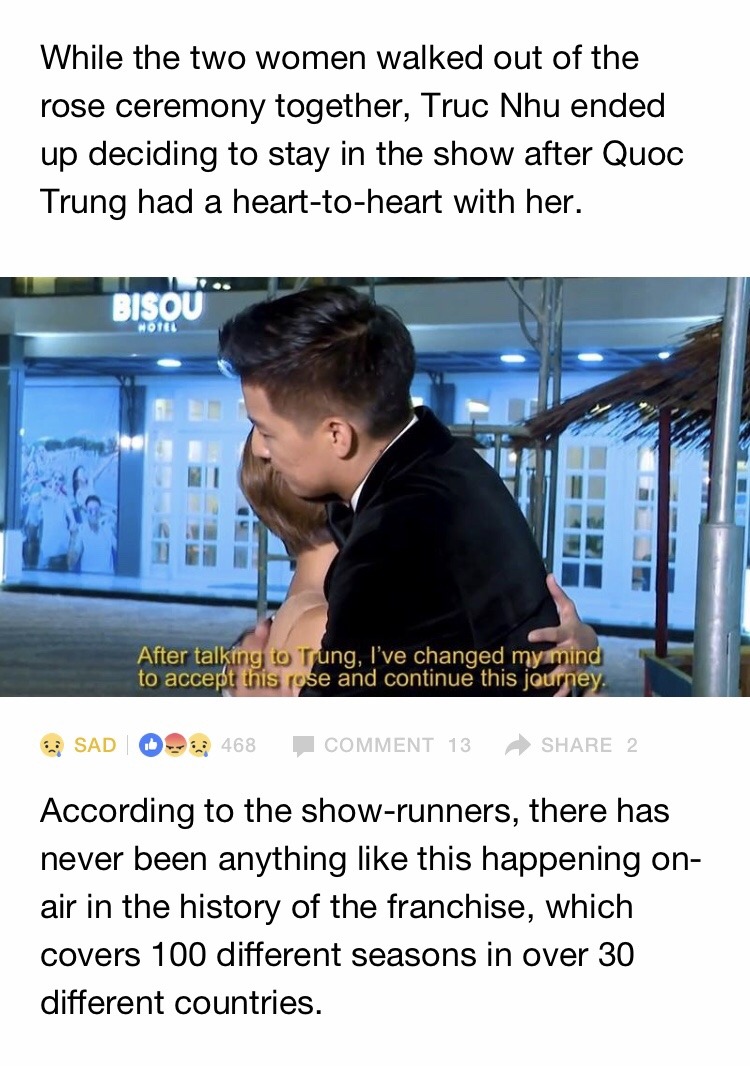
but apparently afterwards, the bachelor quoc trung met up with truc nhu and convinced her to remain on the show, which pretty much broke hearts everywhere:
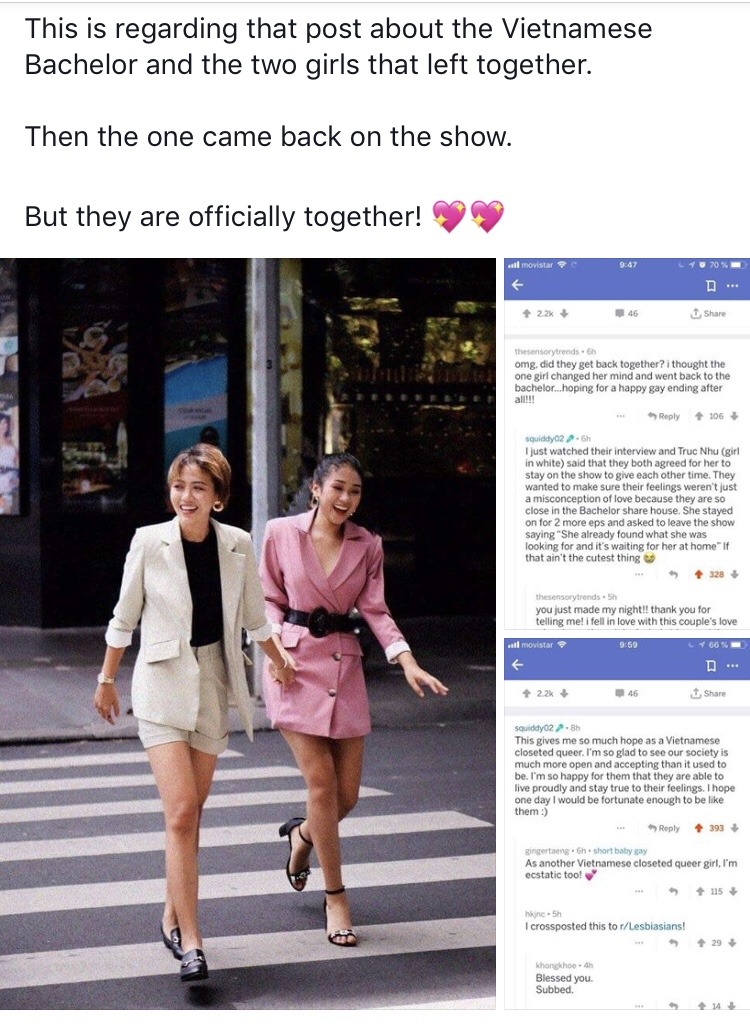
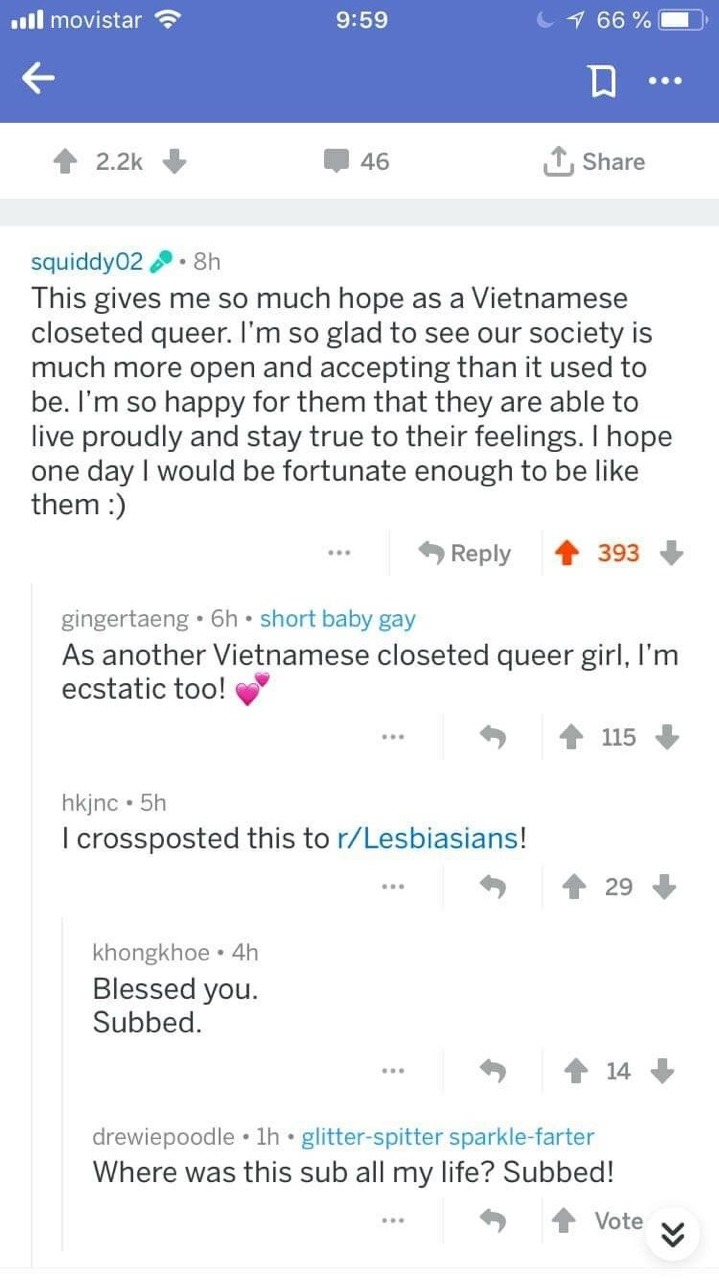
BUT i just found out that minh thu and truc nhu are officially together as a couple!!!
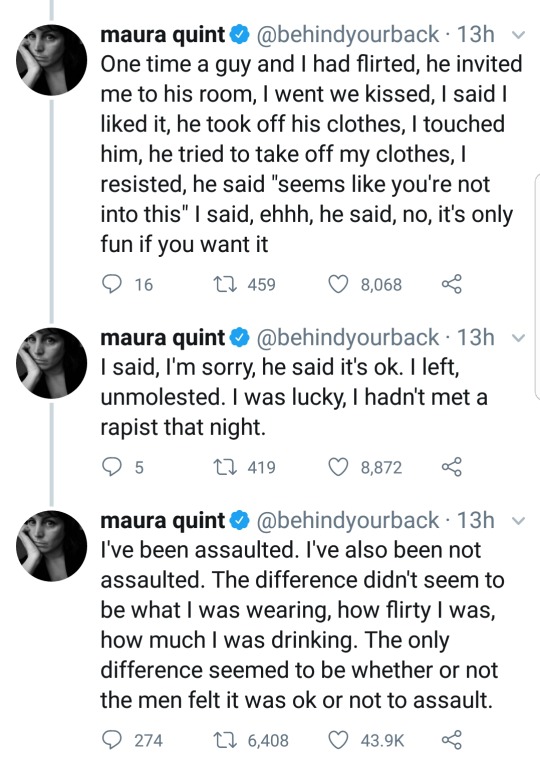
Just fyi that if you are in a monogamous romantic relationship and you start being really emotionally intimate with another person to the point where the lines are blurred and you don’t set proper boundaries, you’re committing emotional infidelity. It’s especially glaring when you purposefully omit the fact you’re in a relationship. It’s one thing to not immediately announce you’re in a relationship the second someone starts talking to you, but there’s a definite point of no return where, if you keep mum on it, things become inappropriate. I’m dealing with this right now, and it feels shitty to realize I’ve been party to someone’s infidelity when I never signed up for that. You don’t have to kiss or touch someone to be unfaithful–you don’t even have to declare feelings. There are behaviors and levels of intimacy coded as romantic and you’ve crossed the line at that point.
When communicating to someone about a sensitive topic, I’ve found it’s helpful to explain why you want to talk about it. If you say you’re worried, or hurt, or just needed to get it off your chest, it can help the other person not get defensive and then more completely process what you’re saying.
Many relationships die by a thousand little cuts. Little problems that on their surface are penny-ante. But the real offense, the hurt, is unresolved. And the little hurts pile up and the resentment builds until things fall apart.
It’s very easy for people to read a bad intent when you’re communicating a problem. Sometimes it’s a natural defense mechanism, if you think someone is just being shitty then you don’t have to really hear them. But it can just as often simply be an incorrect assumption. Communicating your intent can stop that from happening and help the conversation come to a more fruitful resolution.
But if you break it down, your intent is not just a lubricant to keep the conversation productive. Your intent is the point of the conversation. More often than not the problems we have with each other are not the real issue, it’s how those problems make us feel. When you communicate your intent, you’re fully explaining the issue that needs to be resolved.
“I’ve been missing you, could you skip your TV show tonight so we can play a video game together?” works better than “You don’t give me enough attention.” or “you watch too much TV.”
Or “I suspect it’s just my anxiety, but I’m worried that you’re angry with me because you’ve been kind of quiet.” is better than just “Why are you so distant?”
For years I worried that we couldn’t discuss problems because it would cause a fight. That was how the world I lived in as a kid worked. Having a partner who is open to hearing you is huge, but choice of wording helps even when you have a partner who wants to hear you.
very good advice. it really helps when you give the other person something actionable. a request, a suggestion, an offer to brainstorm. don’t complain; troubleshoot.
you don’t have to be emotionless or conciliatory. it’s ok to express anger. just be mature about it, and respect the other person. don’t go on a power trip, don’t leverage your legitimate gripes to make them grovel. keep your eyes on the prize. if you don’t know what the prize is, the next step is to tell them so and invite them to help you figure it out, not to moan until they miraculously do the right thing at random. even when you’re super upset you can still apply these skills.
wrong: “this place is a damn landfill because nobody but me does any housework!”
right: “there is some serious housekeeping fail going on around here. it’s kinda driving me bugfuck. i want to sit down and take a look at how we do the housework, because how we’re doing it right now sucks.”
see how the second one doesn’t blame? blame’s not important. responsibility is important, but that has to be worked out calmly or it’s not going to be functional. the first person is picking a fight; the second person is trying to solve a problem. you’ll notice they’re not smoothing ruffled feathers or acting apologetic, they’re clearly quite annoyed. but they’re aiming their anger at the situation, not the person.
even if they are angry with their housemate, working those feelings out is beyond the scope of the conversation. trying to combine venting with chore planning is, imo, the number one cause of screaming kitchen fights on planet earth.
(I’ve witnessed some drama on twitter, so I tried to be careful with my wording here- but I do express my discomfort and mixed feelings, so, up front, it anyone wants to start a fight about that I’m not interested. I tried to be fair but honest, so I want people to respect that. Also, this is LONG. My mixed feelings took a lot of explaining, it turns out. Warning for a lot of discussion of how fiction engages with csa and rape in general.)
Y’know, when I was thinking about how to approach reviewing Banana Fish, I had a weird realization. My experience watching it was similar to the one I had watching Devilman Crybaby of all things. For both shows, there were a lot of times I didn’t really enjoy watching it in the traditional sense and I often felt pretty uncomfortable with it…but still found it really interesting from a media analysis standpoint, and found the conversation about it really interesting, so I kept watching. (Also I came to kinda care about the characters, even though the narrative seemed almost ludicrously hellbent on torturing them so it felt kinda pointless to have any emotions about ‘em.)
And oddly, there are a lot of other similarities between the shows too? Both are adaptations of manga that was made around the 80s that have been updated so they’re set in the modern day, both seem to try really hard to be “shocking” but it’s just sort of exhausting at times and both have queer content that draws in the fandom, though that content is a mixed bag.
*(Also, both have issues with female characters. Banana Fish is no hellhole of titty monsters and sexual hang-ups, but it should be noted it barely has any women and when they do show up they get victimized to cause men angst).
Don’t get me wrong, though, Banana Fish is its own distinct thing. In fact the tone and construction of the narrative is very different, namely because unlike Crybaby, its aimed at women. The anime comes from a work that is fairly significant in shoujo manga history and its content falls well outside of how Western fandom think of “shoujo manga”.It’s a gritty, violent crime drama set in New York. The intense relationship between the leads was and is important to a lot of LGBT fans, as well as influential to many later works, BL and otherwise. So whether you like it or not, it has a deserved place in manga history.
The basic plot is Ash Lynx (not actually his real name, but the real one is even more ridic) is a 17 year old gangster trying to take down the man who indoctrinated him into gang life and also sexually abused him. On top of that, he has to protect his comatose brother, who somehow got in contact with a strange drug while in Iraq, one that caused him to go beserk and shoot his fellow soldiers. The only thing he said was “Banana Fish”, so Ash wants to know what the heck that means.
Ash runs into Eiji, a nineteen-year-old who came to New York from Japan. Despite the fact Eiji is fairly innocent and sheltered where Ash isn’t (or maybe because of it) he and Ash hit it off pretty quickly. But Eiji won’t remain innocent for long, because he’s quickly dragged into the gang drama.
So yep, that’s the summary. Hey, did you note that “Ash was sexually abused” part? Well, if you’re going to watch the show, prepare for an ENDLESS BARRAGE of that. The amount of horrible abuse and sexual trauma Ash has been through and goes through is honestly SO MUCH that you become numb to it very quickly- sometimes it almost feels like a parody. In addition to having the most tragic of tragic backstories, he’s threatened with rape at the rate of one o rmore times an episode- though this finally calms down around episode 11 (this is probably just a lull).
He’s not the only one though, Eiji and others get their fair share of sexual menace too, and one female character is implied to be raped…To its credit, the show does not show rape onscreen- it’s talked about a ton and we see both the aftermath and some “it’s about to happen, he’s been stripped” but not the act itself. The show also always takes it seriously and touched a bit on the culture of victim-blaming and whatnot-there’s dicussion of how messed up it is to see the police asking a seven year old if he led his rapist on and Ash’s lasting trauma is taken very seriously.
And that’s fine and all but I cannot emphasize that there is. so much. It feels icky and a bit exploitative- but the whole issue is pretty hard for me to parse. It’s kind of interesting to see rape being discussed so frankly and seriously in anime. And considering the manga was from the 80s, I think the fact it DOES discuss it so frankly, and focuses on male victims, was probably eye-opening for a lot of people.
Anifem has a really good article talking with two Japanese LGBT fans about the series, and one says their eyes were opened to the fact boys could be raped and feel trauma from it by reading these series. The rape is never romanticized, it’s treated as truly despicable and I’ve seen pages from the manga on twitter where Ash point blank discusses how in his experience, rape is more about people wanting to have power over you than anything else.
This was written by a woman and aimed at women, and Ash’s tragic life seems to be kind of a way to explore the a lot of the anxieties women grow up with regarding rape and sexual assault. It’s a way for women to engage with the horrors while also being a little bit distanced in it, since Ash is a different gender. I think that has value. It actually weirdly reminds me of a lot of fanfic I’ve read. It’s common to see young female authors pile ridiculous amount of trauma on pretty male characters in them, and it often feels like a young girl’s (often somewhat clumsy) way of engaging with the fears that occupy her mind.
I did it myself- I wrote a lot of stories about REALLY gratuitous sexual violence when I was around nine, where I took the worst possible sexual abuse that could happen to a girl and dumped it on my character, because READING about that kind of abuse had both fascinated me and given me a lot of anxiety, knowing this is a thing that could happen, that it had happened to a lot of kids. So I wrote a story that luridly described all kinds of sexual torture, in a pretty gross way, but also had the girl ultimately fight back and be saved. I kind of doubt Banana Fish will have a happy ending, but there is a similar catharsis in the fact that Ash fights back and takes revenge against his rapist and finds someone who will support him in Eiji.



















 Archive