Flame Princess, Princess Bubblegum and Marceline. Prints, bookmarks, amd stickers of these will be available in my etsy soon. I’m still in the process of organising all my leftover stock from Supanova. My etsy is under my name Annalise Jensen, if you wanted to check it out so far.
“religion is not inherently homophobic/transphobic and religious lgbt people deserve to practice their religion without hate”
and
“many lgbt people have had negative experiences with the church/ religion itself and deserve to respectfully distance themselves from religion, and are under no obligation to give it a try”
Back when I thought I was straight I would go on dates with boys. The boys would usually want to kiss me. I disliked kissing, but I thought that their preferences deserved to count as much as mine, and I reasoned that they probably liked kissing more than I disliked kissing. So kissing was a morally good thing to do. I also reasoned that if I told them I disliked the kissing then they’d feel guilty and enjoy it less. So I did not tell them.
I am certain I was making some kind of critical error but it has taken me a long time to figure out what it might be.
ii.
I like cuddling. I know some straight girls who like cuddling with their straight female friends but don’t want to cuddle with people who might be attracted to them because it makes them uncomfortable. But they don’t want to explicitly tell me this preference because they’re worried it’s homophobic. Ever since I learned that this dynamic was present in at least one friendship of mine I have not cuddled with any straight girls because there’s a plausible scenario in which I’d be making them uncomfortable and they wouldn’t tell me.
“Even though many people seem to be open about homosexuality in Vietnam, it turned out to be untrue when I showed many of them photographs of homosexual couples in intimate moments. Most of them found the photos disgusting and unacceptable. This reaction was a source of inspiration to me. My goal was to make photos about homosexuals that incite feelings of romantic love that is natural and beautiful. I chose to capture casual daily activities of the couples that can be familiar to anyone. By doing so, I hope to make the audience become interested, then gradually empathize with homosexual people.
Many artworks exploring homosexuality in Vietnam tend to focus on either on deviances (especially in movies, with images of homosexuals portrayed in ridiculous clothing and make-up, mincing, shrewish or rude manners…) or symbolic images. In photography, homosexuals are not presented simply as themselves. And if they are, they’re usually photographed from behind or with masks on. These all foster weird and absurd images of homosexuals rather then present more understanding perspectives. In turn, homosexual couples become even more intimidated and isolated.
The Pink Choice has a different approach as it seeks out personal stories using direct language: documentary photography to capture real moments and real people.
Moreover, stories about homosexuality in Vietnam and also in the world usually end in tragedy, especially in movies. On one hand, this tragic style of storytelling can make audience become more sympathetic and understanding of the difficulties that homosexuals experience. On the other hand, the drama of homosexuals can also cause misunderstandings that lives of homosexuals are vulnerable and regretful, and that the choice to “come out” is an incredible effort against the community’s way of life. The point is, in real life, there are many homosexual people who live happily with their identity. There are homosexual couples who love, nurture and build a happy family life together.
The Pink Choice is a series of photographs about the love between homosexual couples, focusing on living spaces, the affectionate touches, and more importantly, the synchronized rhythm of lovers sharing life together. Viewers may not feel the personalities of the subjects in the photographs, but hopefully they can feel the warmth of their love and mutual caring. In way, I wanted to show what I see of homosexual people and not how they see themselves.”
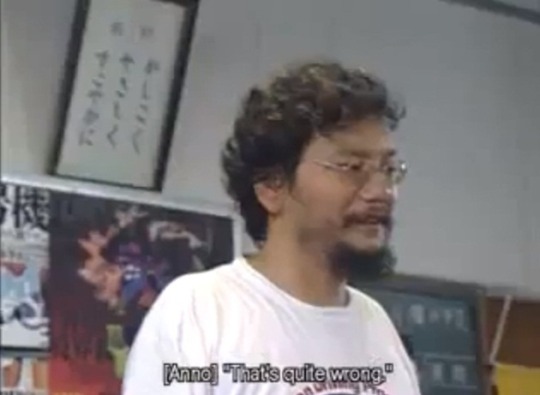
the commercialization of Evangelion is the most ironic spit-in-the-face to Hideaki Anno. like it ranges from funny to genuinely upsetting
Anno: mecha anime glorifies child soldiers and completely disregards the psychological damage they receive, so i’ll take these three characters and mentally tear them apart and have them face a surrealist apocalypse while luring in otaku to show them how real people actually function
*every anime since 2000 proceeds to implement one-dimensional Frankenstein’s of Asuka and Rei in cheap harem light novels while Evangelion gets 4 remake films, a 14-volume manga, 23 video games, god-knows-how-many figmas, and an amusement park*
Yeah, this show he made for a number of reasons that ran out of money and ended up being such a major success over time that it gave him and his studio a world wide audience. I think I remember hearing about how Eva saved Gainax and anime as a whole. This shows success in the marketing field allowed for Gainax and Anno to keep making anime. Plus, have you ever heard him being bitter about making all that money? I know the closest I’ve ever seen him get to that is his thoughts on how the show is misunderstood for something deeper then what it actually is.

 Archive